Dark crime comic archive

Against violence, in the shadows.

Vio-LEnce is a dark crime comic. Murder, abuse and violence surround the story, but the hero stands against violence itself.

A fictional crime story with mature themes. The central idea is not the glorification of violence, but standing up against it.

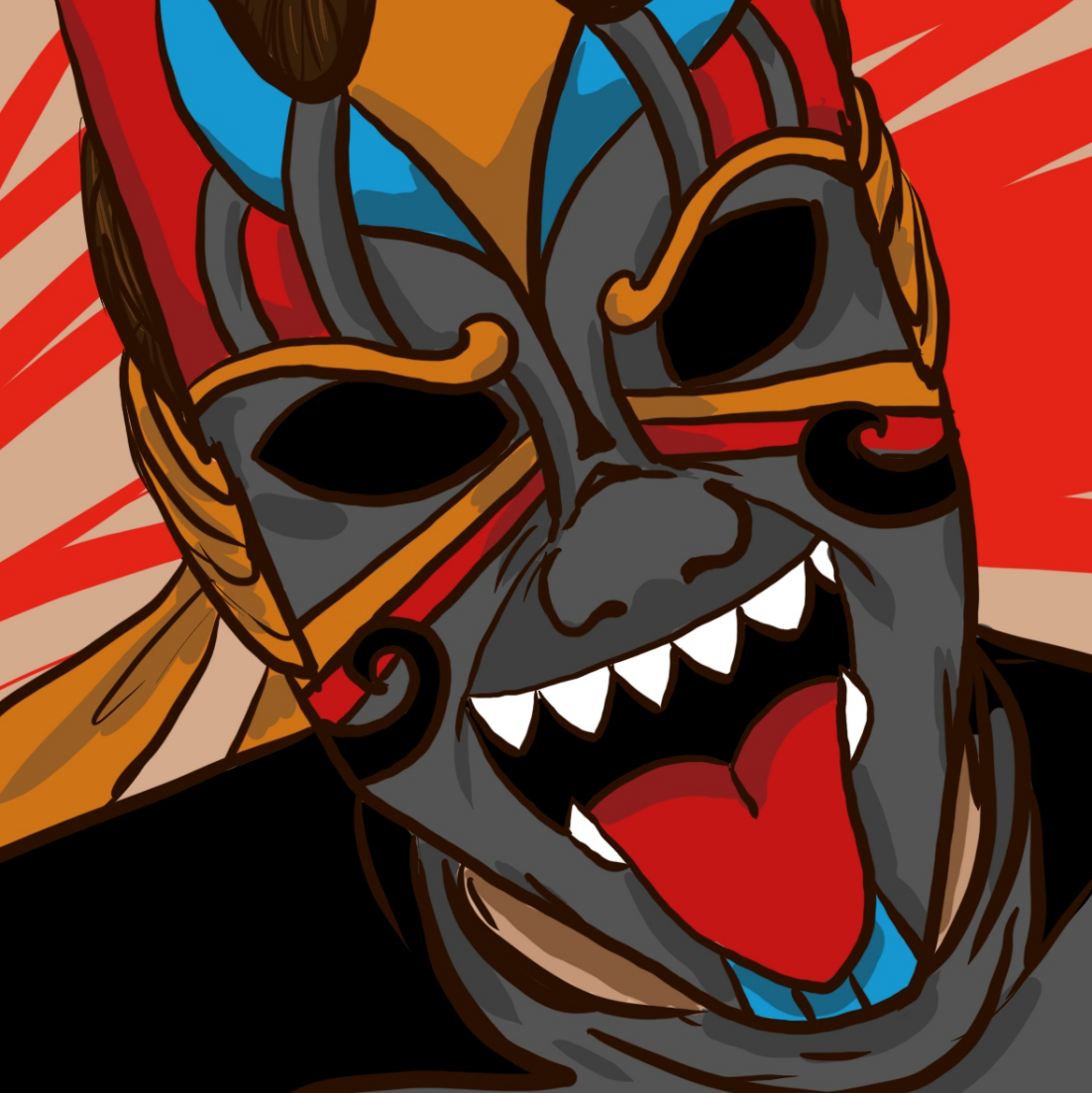
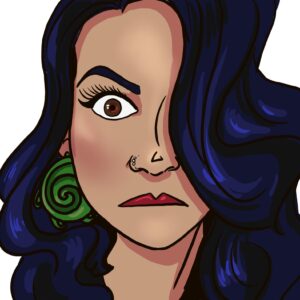
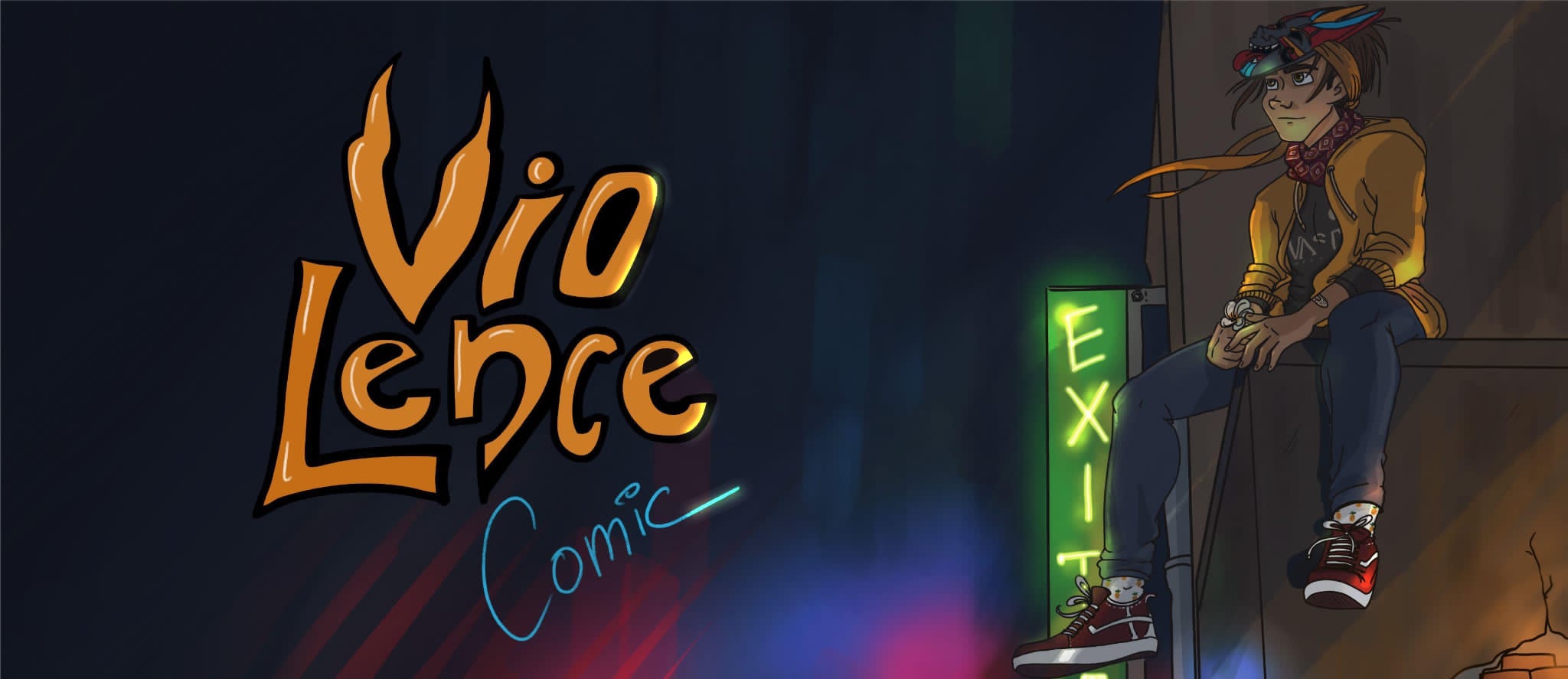
Vio character illustration

What is Vio-LEnce?

The story of a New Zealand boy

The story follows a New Zealand boy, Kalen Lence Ngata, who lives his quiet life by day, far from his homeland. At night, for extra money, he beats up harassers, abusers and domestic aggressors on request.

Then one day he gets involved in something he probably should not have….

Downloadable versions and embedded reader

Episodes

Choose an episode, read it embedded, or open the PDF in a new tab. The PDFs load from the existing episodes/ directory.

Current episode

Episode 1 — Day and Night

Open Download

Page navigation is handled by the browser’s built-in PDF reader. On mobile, use the Open button if the embedded view is not comfortable.

Episode 1

Day and Night

PDF
Episode 2

A Bad Day

PDF
Episode 3

My Sweet Cherry Pie

PDF
Episode 4

Side B of the Tape

PDF
Episode 5

Kahurangi me karaka

PDF
Episode 6

The Noose

PDF
Episode 7

The Puzzle Pieces

PDF

About the comic

Research, personal stories and long background work

After long encouragement from friends, I finally started creating a story that had existed for many years. At first, with hesitation and fear, I shared the first two episodes on a public platform, and to my great surprise, over time they began to spread.

Choosing a cultural sphere that is less known here requires a great deal of background work, which I try to maintain and expand continuously. Recently I have received a lot of international help with this, materials, collections and sources, for which I am indescribably grateful.

Two years ago I also started learning the Māori language to gain a better and more authentic view of the characters that define the story.

As historical reenactors, the three of us like to strive for authenticity, and this is no different in my work. Many creators use defining cultural elements in their stories; I chose Māori culture. I took on a difficult task, entering almost completely unknown territory, but I grew very fond of it. I believe that introducing even a small corner of any people’s culture is a great thing. We ourselves are happy when we hear from a foreigner that they have heard about us; elsewhere it is the same. Let us get to know one another, even through a small part of culture, because that can only bring good.

In the comic, besides New Zealand, the main storyline takes place in another location that is not named. This is intentional: the location is fictional, because we did not want to attribute the negative events to any real country or create bad PR for it.

In the comic, Vio’s commissions are all based on real events, and I would like to thank those who trusted me by sharing their stories.

In most stories, heroes are rich or have superpowers and have nothing to lose, while the main villains are monsters by nature. But true heroes must be sought in real life, with all their flaws, and villains with all their emotions.
Cultural background

About Māori culture

The existing background material has been preserved and reorganized into readable expandable blocks.

Who are they?

The Māori are the indigenous people of New Zealand, belonging to the Polynesian peoples, and they have been present in the islands since the 1300s.

In the 18th century, European settlers, similarly to what happened in America, pushed Māori communities aside. By the middle of the century they had gradually lost much of their land, language, and cultural background. From the middle of the 19th century, however, their population began to grow again and their culture started to rise once more. Although the Māori language is still spoken by relatively few people, new movements are giving its education increasing space today.

Around 15–20% of New Zealand’s population is Māori, and Māori is now another official language of the country alongside English.

Further reading: hu.wikipedia.org

About their tattoos, Ta moko

Māori have their own traditional tattooing technique, originally made with bone and shell tools on the face, legs, thighs, buttocks, and sometimes across the entire body. Today ta moko is of course also made with modern tattoo machines, but some artists still work with traditional methods. The difference is visible on the tattoo itself: traditional tattooing leaves a scarred, raised surface that remains later, unlike modern tattoos.

For an original ta moko, respected elders known as Kaumatua decide who is suitable. If they consider someone mature enough to carry the tattoo, it is a great honor; in earlier times it was considered improper to refuse it.

The process is painful and lasts several days. The person receiving the tattoo must follow various rituals during the days of the tattooing, such as prescribed diet and abstinence from sexual contact. While the tattoo is being made, relatives and friends distract the person from the pain with songs, chants and conversation.

The patterns are highly individual and speak about the qualities of the person wearing them. They follow a strict dual system, symbolizing the visible world, the black parts, and the invisible world, the untouched skin. Moko may only be worn by Māori and made by Māori. A non-Māori person may only have kirituhi.

Further reading: www.zealandtattoo.co.nz

If you would like a similar but much less painful technique in Hungary: Archeo Tattoo / Facebook

About Māori weapons

Three basic weapons appear in the story: the patu, the tewhatewha and the taiaha. Mastering the use of any of these weapons primarily requires a practiced movement culture. Like all traditional weapon use, it demands years of serious training and study.

For a long time students train with practice wood. Only later does someone become entitled to possess a real weapon made in the traditional way.

Further reading: www.youtube.com

Songs and the haka

In Māori culture, every celebration, mourning, greeting and situation can have its own chant, song, waiata or haka. The movements of the haka are taught from very early kindergarten age, and today not only in Māori communities but also in education throughout New Zealand.

The choreography consists of strictly fixed movements and is taken very seriously. A haka performed badly, or in the wrong place at the wrong time, is one of the greatest insults one can commit. Laughing at a haka or not taking it seriously is considered blasphemous, and it is believed that punishment from the gods immediately follows.

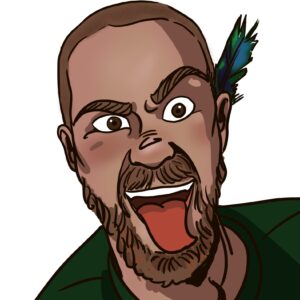
One of its characteristic elements is the protruding tongue with a threatening facial expression. Its meaning is roughly: ‘I will bite off your head / I will take your mana / I will take your life force.’ It is directed at harmful, evil things.

More about haka: www.youtube.com

Short introduction: www.youtube.com

Māori songs: tereomaori.tki.org.nz

Customs

Despite their warlike character, Māori are very hospitable. There is a term for this: manakitanga, meaning kindness, helpfulness and hospitality toward others.

Ceremonial greetings also exist. They are usually performed for highly respected guests or during special community initiations at the Marae, a sacred communal place. Every sentence and gesture has a role. The ceremony begins with the karanga, a form of greeting always performed by a woman. It is answered by a return greeting; at the end the parties take their seats, followed by a speech, then a song, waiata, and finally gift-giving if there is any.

The end of a meeting ceremony is the hongi, a greeting form in which, instead of a handshake, foreheads and noses touch while shoulders are touched, and in more intimate circles hands are clasped for the duration of one breath. This is ‘bone to bone, soul to soul’ — a physical and spiritual form of greeting.

Of course, shared food is also part of the ceremony. It is the closing part of the welcoming ritual, the sharing of hā kari.

Basics: play.google.com

Clothing

Māori communities are made up of different tribes, called iwi. Depending on their territory, these groups have different legends, origins, cultural differences and clothing.

This cultural sphere does not contain the same kind of bodily shame or taboo around sexuality that we are used to. This can also be observed through their swear words: apart from borrowed expressions, they do not have real swear words with sexual references. Nevertheless, their traditional clothing covers modesty, even if it is often suggestive, especially for men, and it is colorful and varied.

One of the most characteristic elements is the piupiu, a skirt-like garment made of plant fibers with meticulous work.

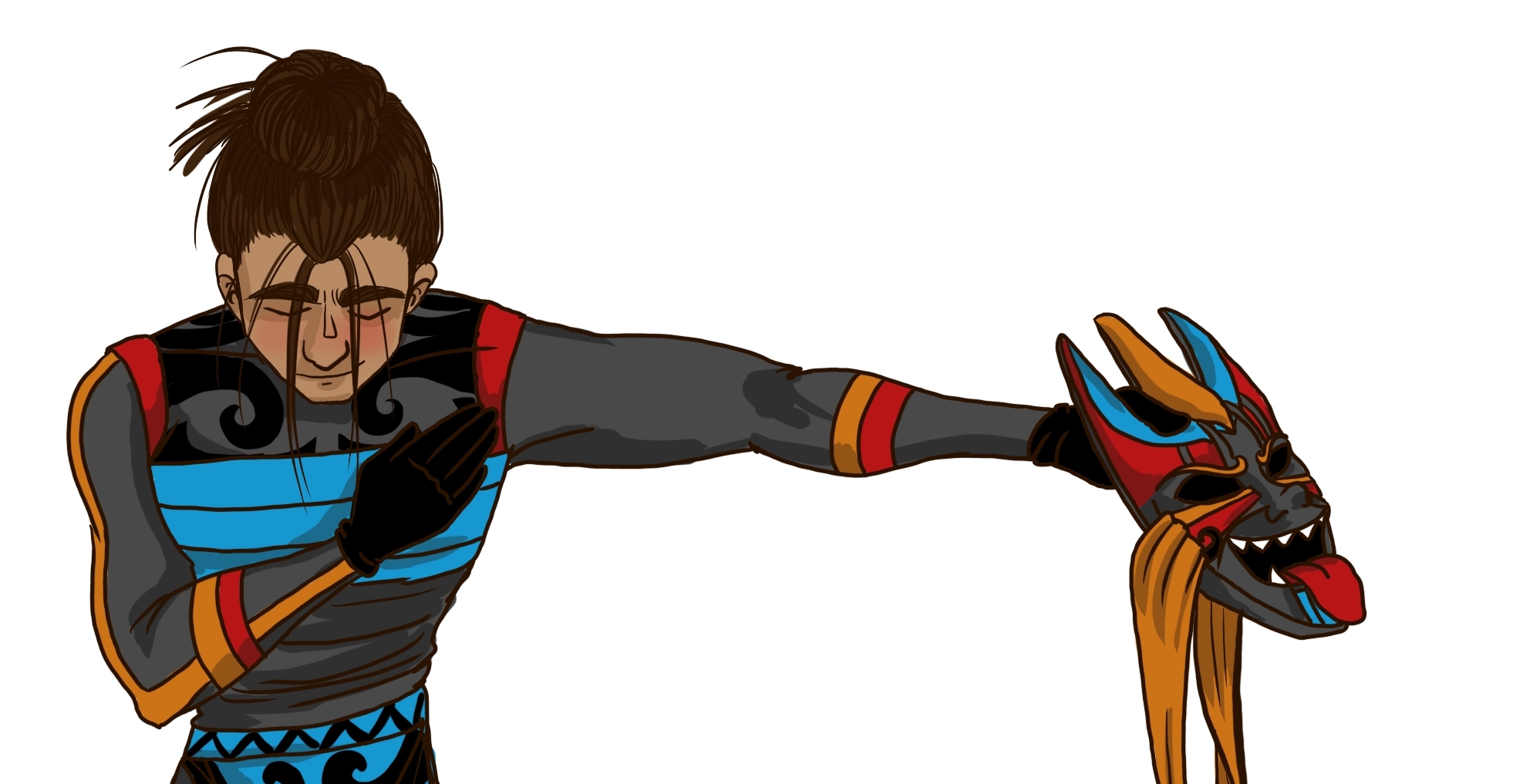
In the past, the kahu kiwi cloak made from kiwi bird feathers, much like the korowai cloak that also consists of bird feathers and has a woven border called tāniko, symbolized social rank. Vio wears this around his waist. Today, naturally, reenactment groups no longer make this garment from the feathers of protected birds.

Their hairstyles feature various buns and hair bindings, decorated with bone combs and feathers of the now extinct huia bird. Loose hair originally symbolized mourning.

For Māori, the head is sacred, and so are the hair and anything on the head. Touching it as a stranger is one of the greatest insults. Pulling hair, cutting it off, or mutilating the head is a sign of humiliation. It is believed that a person’s spiritual strength, mana, is guarded by a being called manaia, circling around the head; reaching there disturbs the manaia.

Language

The Māori language is very distinctive and has a much shorter alphabet than the regular Latin alphabet. Its letters are a, ā, e, ē, h, i, ī, k, m, n, ng (pronounced as a strong combined n-y sound), o, ō, p, r, t, u (pronounced between u and ü), ū, w, wh (pronounced f). Although many words have now been borrowed, there are still words whose meanings are often debated because they may have regionally different meanings or have disappeared from everyday use.

If you would like to learn a few words: play.google.com

Crew

Creators

Tóth György Szilveszter

Tóth György Szilveszter

editor, website handler, resident grammar nazi

Bakos Réka

Bakos Réka

artwork and story creator, struggling with mental health issues

Nemes Elison Zoltán

Nemes Elison Zoltán

website editor, antianxiety coach and community relations

Tébesz-Tóth Anikó

Tébesz-Tóth Anikó

text and storyline checker, responsible for fighting the creator’s severe wording disorder

Laurent Diána

Laurent Diána

editor, supervisor of the visual appearance

Szarka Gergely

Szarka Gergely

He speaks English

Petró Vanda

Petró Vanda

Thank God, she speaks English too

Mátyás Éva

Mátyás Éva

review and proofreading of the English-speaking parts

Acknowledgements

Special thanks

  • Pocsainé Vörös Panni
  • Nemes Elison Zoltán
  • Törköly Anita
  • Hemi Kelly – For Māori phrases and words
  • Jhon C. Moorfield – Te Aka Online Māori Dictionary
  • Sir George Gray – Māori Folklore Or Ancient Traditional History Of New Zealanders
  • University Of Otago
  • Jordan Watson (How To DAD)
  • Helen Mountain Harte M.A. & Liz Harte – Māori Parenting / Pēpi Penapena
  • Waka Huia TVNZ – Documentary Series
  • Mervyn MCLean – Traditional Songs Of the Māori
Thank you illustration

New episode notifications

Would you like to know when a new episode arrives?

Follow us on Facebook and Instagram!

Questions? Contact us: violencecomic@gmail.com